AI Voice Agents Explained: What Every Business Owner Should Know
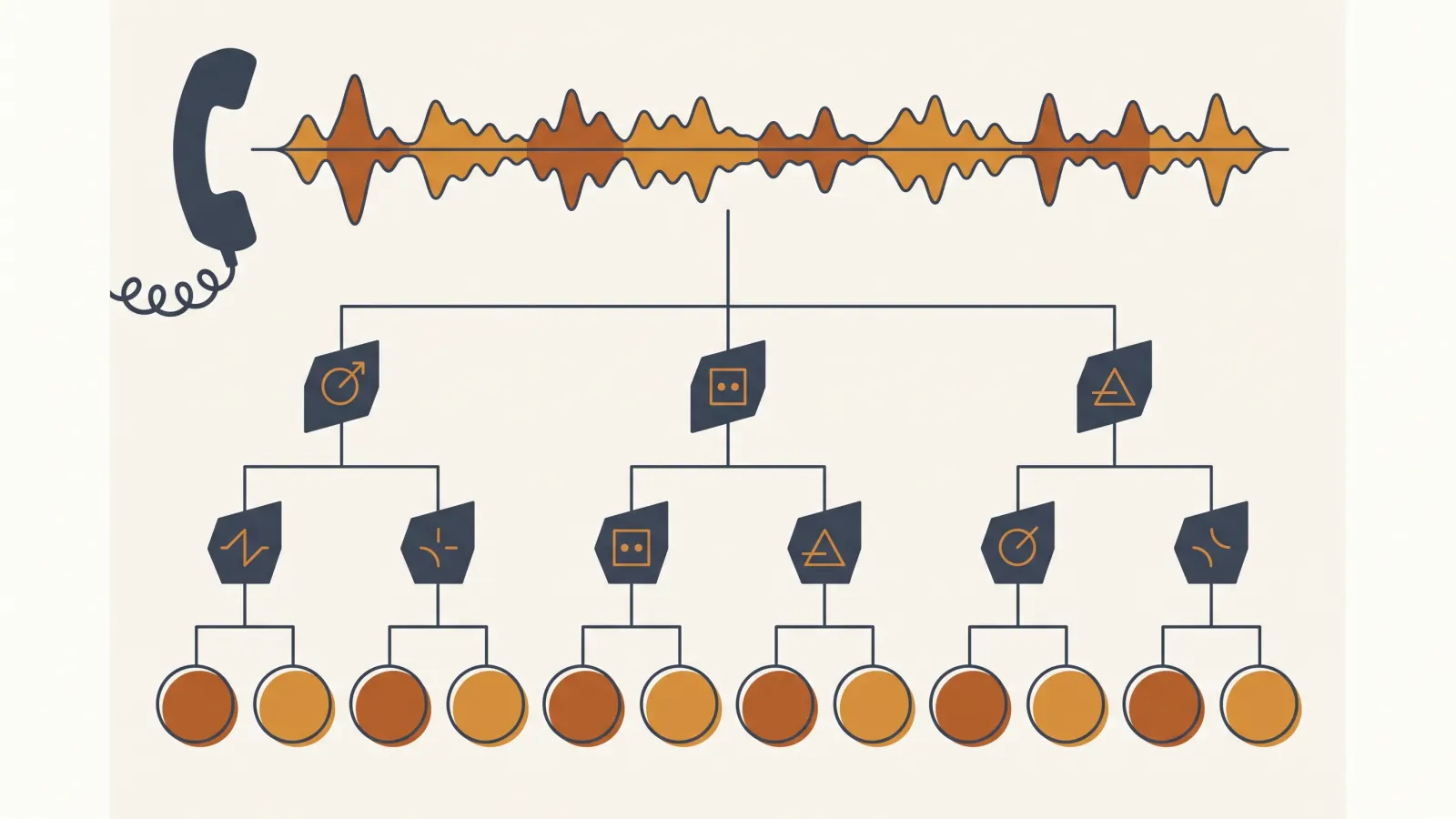
An AI voice agent is software that answers or places phone calls, holds a normal conversation, and finishes a task such as booking an appointment or taking a message, then writes the result into your calendar or CRM. This guide covers what one costs per minute in October 2026, how the two build approaches differ, the FCC and Texas rules you have to follow, and which calls to keep with a person.
The Challenge
You have heard a voice agent demo and it sounded fine. The questions you still have are the ones vendors skip: what it costs per month at your call volume, why some agents pause for two seconds before answering, whether you are allowed to record the call, and what the FCC says about AI voices on the phone. This post answers those with October 2026 list prices and the current rules, so you can decide with numbers instead of a demo.
What You Will Learn
A voice agent listens, decides with a language model, speaks a synthesized reply, and writes the result into your calendar or CRM during the call. A phone tree waits for a keypress.
Pipeline builds (transcribe, think, speak) cost less and are easier to control. Speech-to-speech models sound more natural and cost more: $0.38 per minute for OpenAI's flagship on Retell against $0.064 for a standard text model.
October 2026 list prices: Retell $0.07 to $0.31 per minute, Vapi $0.05 hosting plus provider costs, ElevenLabs $0.08, Bland $0.12 to $0.14. HIPAA is a separate line, $2,000 a month on Vapi.
Outbound AI-voice calls need prior express consent under the FCC's February 2024 ruling. Texas is one-party consent for recording; about a dozen states need everyone's consent, so announce recording on every call. Texas clinics must disclose AI use under TRAIGA since January 1, 2026.
Fit comes down to missed calls, predictable call patterns, and a system with an API. Start with after-hours scheduling for 30 days and measure answered calls, completed tasks, and bookings.
Follow Along
What a voice agent is, and how it differs from the phone tree
A phone tree (IVR) plays a menu and waits for a keypress. A voice agent listens to what the caller says, decides what to do using a language model, and speaks a reply in a synthesized voice. The caller talks the way they would to a person: "I need to move my Thursday appointment to next week." The agent checks the calendar, offers two open slots, books one, and sends a confirmation text.
Three things make this work in 2026 that did not work in 2021:
- Speech recognition that handles accents, background noise, and people talking over the agent. Interruptions no longer break the call.
- Language models that follow a script loosely instead of matching keywords. The caller does not have to say the magic word.
- Tool calling. The model reads and writes to your scheduling system, CRM, or order database during the call, so the booking lands in the right place without anyone retyping it.
The agent still has limits. It works from the instructions and data you give it. Ask it a question outside that scope and a well-built agent says so and transfers the call. A badly built one guesses. The difference is in the setup, not the model.
Two ways to build one, and why the pause matters
Every voice agent on the market uses one of two architectures. The choice sets both the price and the feel of the call.
Pipeline (speech-to-text, then a language model, then text-to-speech). Three separate services pass text between them. You pick each part: a Deepgram transcriber, an OpenAI or Anthropic model, an ElevenLabs or Cartesia voice. It is cheaper, easier to control, and easier to swap parts. The cost is delay. Each hop adds time before the agent starts speaking.
Speech-to-speech. One model takes in audio and produces audio. OpenAI's gpt-realtime-2.1 is the main example. There is no transcription step, so the model hears tone and pacing, and it handles interruptions more like a person would. It costs more. On Retell, the flagship speech-to-speech model bills at $0.38 per minute against $0.064 for a standard text model, and the mini version at $0.07 (Retell pricing, October 2026).
The number to ask any vendor for is latency: how long the caller waits after finishing a sentence before the agent starts talking. Hamming's January 2026 analysis of production voice agents put the median at 1.4 to 1.7 seconds and the 90th percentile at 3.3 to 3.8 seconds. Their target for a natural conversation is under 800 milliseconds, and above 1.5 seconds the conversation breaks down (Hamming, Voice AI Latency). Demo calls run under ideal conditions. Ask for the P90 on real calls, and listen to recordings from the vendor's existing customers before you sign.
What it costs per minute in October 2026
Voice agents bill per minute of talk time, plus a platform fee on some plans, plus the build. List prices I checked on October 7, 2026:
| Platform | Per-minute | Monthly platform fee | Notes | |---|---|---|---| | Retell | $0.07 to $0.31 all-in, by model and voice | None on pay-as-you-go | $0.055 infra + $0.015 telephony + $0.015 standard voice + language model ($0.0016 to $0.64) | | Vapi | $0.05 hosting, then provider costs at pass-through | $0 or $29 (Core) | Vapi's calculator estimates $82 to $129 per month for 1,000 minutes | | ElevenLabs Agents | $0.08 ($0.16 above your concurrency limit) | Plans from $6 to $990 with bundled minutes | Language model and phone line billed on top | | Bland | $0.14 (Start) or $0.12 (Build) | $0 or $299 | Telephony extra, transfers $0.04 to $0.05 per minute |
Two add-ons move the bill more than the headline rate:
- Premium voices. On Retell, a standard voice costs $0.015 per minute and an ElevenLabs v4 voice costs $0.10. Pick the voice after you have heard both on your own script.
- HIPAA. Vapi charges $2,000 per month for its HIPAA add-on. Retell offers a BAA on enterprise contracts only, with custom pricing. If you are a clinic, this line item belongs in the budget on day one.
These are list prices and they change often. Vendors run calculators on their pricing pages. Put your own numbers in before you budget.
A worked monthly budget, next to a receptionist's salary
Take a business that gets 600 calls a month averaging three minutes, so 1,800 minutes.
- Budget stack (Retell infra, Retell telephony, a standard voice, GPT 5.4 mini): about $0.11 per minute, or roughly $200 a month.
- Better stack (same, with an ElevenLabs Flash voice and Claude 5.5 Sonnet): about $0.17 per minute, or roughly $310 a month.
That is my arithmetic from Retell's October 2026 price list, before a phone number ($2 a month) and before the build. The build is the larger cost in year one: call-flow design, calendar and CRM integration, testing on real calls, and a few weeks of tuning after launch. On my projects that work runs four to eight weeks.
For comparison, the Bureau of Labor Statistics puts the median receptionist wage at $18.27 an hour in May 2025, or $38,010 a year, with the top 10 percent above $24.01 an hour (BLS Occupational Outlook Handbook). Add payroll taxes and benefits on top.
Read that comparison carefully. A voice agent at $200 to $310 a month does not replace a receptionist who greets walk-ins, handles mail, and knows which patient is a talker. It replaces the calls that currently ring out. CallRail's July 2026 data puts the share of business calls that go unanswered at 28 percent on average (CallRail). If your number is anywhere near that, the agent pays for itself on recovered bookings before you touch headcount. Run your own volume through the AI ROI calculator.
The rules: FCC, call recording, and AI disclosure in Texas
None of this is legal advice. It is the list of rules that shaped the builds I have done, and the reason each one matters.
The FCC treats an AI voice like a prerecorded voice. On February 8, 2024, the FCC issued a declaratory ruling that AI-generated and cloned voices count as "artificial or prerecorded voice" under the Telephone Consumer Protection Act (Wiley summary of FCC 24-17). The restriction applies to calls your agent initiates. Appointment reminders, follow-ups, and re-engagement calls need prior express consent from the person you are calling, and marketing calls need that consent in writing. Collect it at intake, in plain words, and keep the record. Inbound calls that a customer places to you do not trigger that consent rule, since you did not initiate the call.
A disclosure rule is proposed and not final. In August 2024 the FCC proposed requiring callers to say at the start of a call that it uses AI-generated technology, and to spell out AI calls in consent forms (Hogan Lovells summary). As of October 2026 I found no final rule adopting it. In the same week I wrote this, the FCC was taking comments on a petition to let political groups send AI-voiced robocalls to cell phones without consent, with reply comments due October 19 (AP via KSAT, October 7, 2026). The rules are moving. The safe build announces the agent is AI in its first sentence regardless.
Recording consent depends on where the caller is standing. Texas is a one-party consent state. Under Penal Code 16.02 it is a defense that you are a party to the call or that one party consented, and unlawful interception is a second-degree felony (Texas Penal Code 16.02). The civil side, Civil Practice and Remedies Code 123.004, allows $10,000 per violation (RCFP Texas recording guide). Roughly a dozen states require every party's consent, among them California, Florida, Illinois, Maryland, Massachusetts, Montana, Nevada, New Hampshire, Pennsylvania, and Washington, and the published lists disagree on a few others. You do not know which state a cell phone caller is in. Record the "this call is recorded" notice into the greeting on every call and the question goes away.
Texas added an AI law on January 1, 2026. The Texas Responsible Artificial Intelligence Governance Act requires health care providers to give patients clear notice when AI is used in relation to their service or treatment, no later than the first date of service, and requires government agencies to tell people they are interacting with an AI system (Covington summary). The Attorney General enforces it, with a 60-day cure period and penalties from $10,000 to $200,000 per violation (Morgan Lewis summary). If you run a clinic in Texas, the voice agent's greeting and your intake paperwork both need the notice.
Calls that work today, and calls to keep with a person
The agent earns its keep on calls with a defined outcome and a system to write into.
Works today
- Scheduling, rescheduling, and cancellations against a live calendar.
- Reminder calls with one-touch rescheduling. In the healthcare scheduling case study, reminders at 72, 24, and 2 hours cut the no-show rate from 18 percent to 4.9 percent and recovered $420K a year, with the agent answering 99.2 percent of calls within three rings.
- The 20 questions that make up most of your call volume: hours, location, pricing, what to bring.
- Order and ticket status lookups.
- Lead intake: name, need, timeline, best callback window, written straight into the CRM.
- After-hours coverage and overflow when every line is busy.
- Spanish and English on the same number, with the agent switching when the caller does.
Keep with a person
- Anything that needs judgment the caller will hold you to: a clinical question, a legal position, a pricing exception.
- Upset customers. A good agent detects the tone and transfers. Do not ask it to de-escalate.
- Payments by phone, unless the platform handles card capture under PCI rules and you have confirmed that in writing.
The design rule I use: the agent either finishes the task or hands off with context. It never leaves the caller in a loop.
How it connects to your calendar and CRM
The integration is the part that turns a demo into a tool. During the call, the agent calls functions you define: check availability, book slot, look up order, create contact, send SMS. Each one hits your existing system through its API. Google Calendar, Calendly, Acuity, HubSpot, Salesforce, Jobber, ServiceTitan, and most EHRs expose one.
If your system has no API, the agent still takes the message and emails a structured summary, and a person enters it. That works, and it loses most of the time savings. Before you buy, list the three systems the agent must touch and confirm each has an API or a Zapier/Make connector.
After the call, the transcript, the recording (if you record), and a short summary attach to the contact record. You read five summaries in the time it took to listen to one voicemail.
Is your business a fit, and how to start
Three questions settle it:
- Do calls go unanswered? Pull last month's missed-call count from your phone system. If it is a handful, start with a better voicemail. If it is dozens a week, the agent has a job.
- Do most calls follow a pattern? Scheduling, status, and the same ten questions are a fit. Calls that start "it's complicated" are not.
- Is there a system to write into? A calendar or CRM with an API. Without one, the agent is a transcription service.
Start with one call type for 30 days. After-hours scheduling is the usual first pick because the baseline is zero: today those calls go to voicemail. Measure three things: calls answered, tasks completed without transfer, and bookings made. Then add the next call type.
JY Labs builds voice agents on these platforms for clinics, home-service companies, and professional firms. The first step is a $350 AI strategy session, credited in full toward a build if you go ahead. You leave with your call volume costed on current prices, the rules that apply to your industry, and a yes or no on fit. Book it here, or read the voice agents service page first.
Outcome & Impact
You now have current per-minute prices from four platforms, a worked monthly budget next to the BLS receptionist wage, the FCC consent rule for outbound AI calls, the Texas recording and AI disclosure rules, and a three-question fit test. If your phone system shows dozens of missed calls a week and most of them are scheduling or status questions, a voice agent on after-hours coverage is the lowest-risk place to start.
Get AI Insights Delivered
Join our newsletter for case studies, tutorials, and automation strategies.
Additional Benefits
Voice Agents vs Chatbots: Which Do You Need?
Callers want something done now: book, cancel, confirm. Website visitors are earlier, comparing options and reading. If your customers call, build the voice agent first. If they browse and email, a website chatbot backed by your own documents covers more ground. The two share a knowledge base and a CRM connection, so adding the second one later is configuration. The [RAG agents vs FAQ chatbot](/blog/rag-agents-vs-faq-chatbot) post covers the website side.
Handling Sensitive Information Securely
Voice platforms offer HIPAA and PCI configurations as paid add-ons or enterprise contracts, not defaults. Ask for the BAA and its price before you compare per-minute rates. Confirm where recordings and transcripts are stored, how long they are kept, and who at the vendor can read them. Retention options such as zero data retention appear on mid-tier plans and up. Put the compliance requirement in the vendor evaluation, with the price next to it.
The 30-Day Test: How to Start Small
Pick one call type, usually after-hours scheduling, because today those calls reach voicemail and the baseline is zero. Run the agent for 30 days. Count calls answered, tasks finished without a transfer, and bookings made. Listen to ten recordings a week and fix the script where callers stumble. If the numbers hold, add overflow during business hours, then the next call type.
Ready to Transform Your Business with JY Labs?
We help businesses and founders turn AI ideas into reality: fast, secure, and production-ready. From chatbots to custom automation, our team delivers results you can trust.
Never Miss a Tutorial
Get the latest AI automation insights and case studies delivered to your inbox.
You Might Also Like

Voice Agents Cut No-Shows 73% at a Healthcare Network
A regional healthcare network deployed AI voice agents for appointment scheduling, reminders, and...
AI Content Creation for Business: What It Can (and Can't) Do in 2026
AI content creation tools in 2026 draft, edit, and adapt business content at scale, and they pay off...

AI Lead Generation Explained for Business Owners
AI lead generation is software that builds a list of companies matching your best customers, fills...