AI Content Creation for Business: What It Can (and Can't) Do in 2026
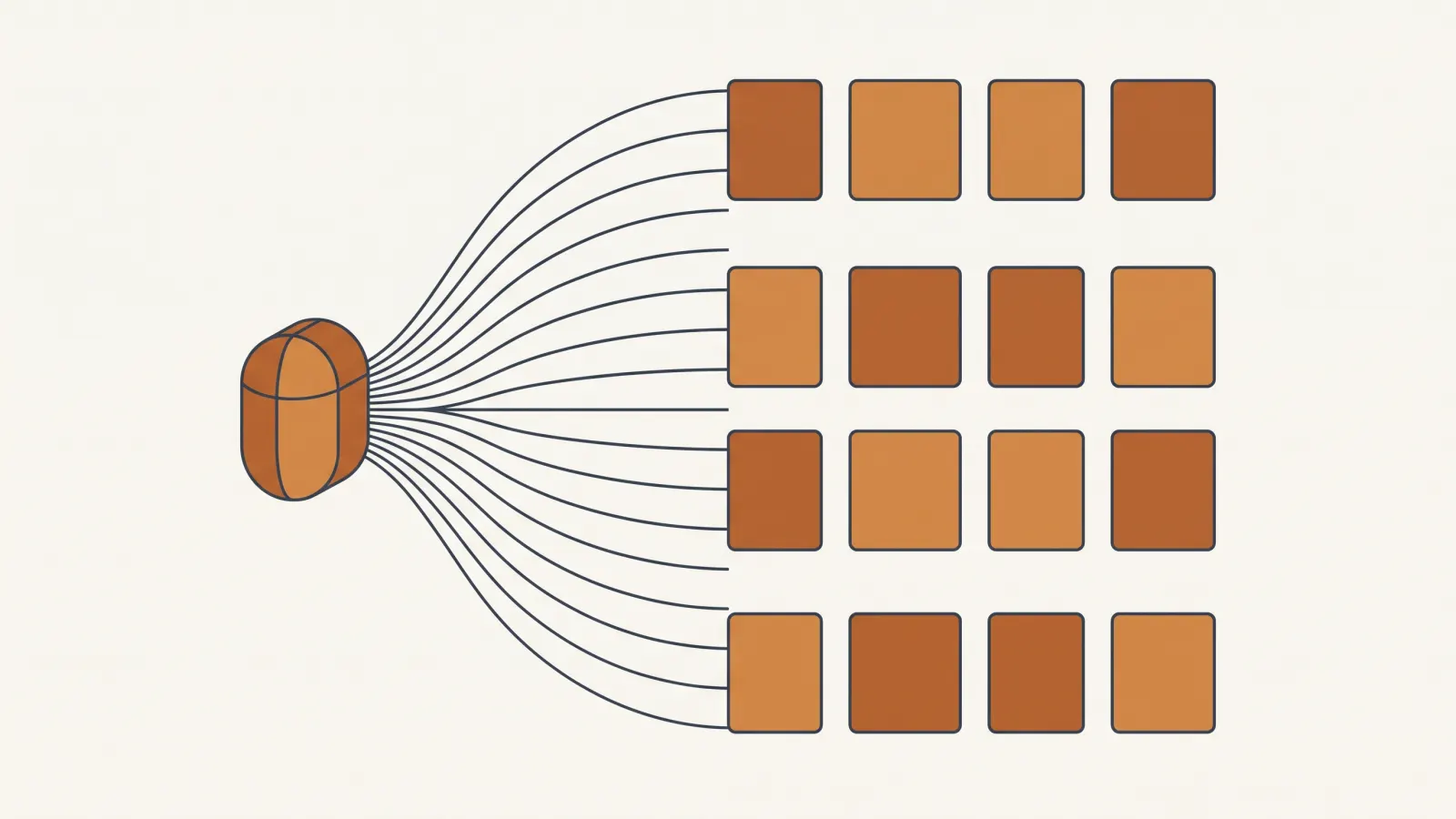
AI content creation tools in 2026 draft, edit, and adapt business content at scale, and they pay off when you train them on your brand voice, fact-check every output, and keep a person in charge of what gets published. This guide covers what Google, the FTC, and the Copyright Office require as of October 2026, which writing, image, and video tools are current, and the content volume where the investment pays back.
The Challenge
Owners arrive at this topic from one of two positions. One group expects AI to replace the content team by Friday. The other refuses to touch it after reading a robotic blog post on a competitor's site. Both positions cost money. The first produces thin pages Google now names in its spam policy. The second leaves a small team hand-writing product descriptions one at a time. The workable position sits between them, and in 2026 it comes with rules from Google, the FTC, and the Copyright Office you need before you scale anything.
What You Will Learn
AI content tools in 2026 draft in your voice from examples you provide. Seats run $14 to $25 per user per month, and the pipeline around the model is where the return comes from.
Google rewards quality regardless of method, names bulk AI pages without value as spam, and as of October 1, 2026 tells you to fact-check every AI output including titles, meta descriptions, and alt text.
AI Overviews cut clicks on traditional results from 15% to 8% in Pew's data. Content gets cited for first-hand material a model cannot invent: your prices, process, numbers, and photos.
The FTC bans fake reviews including AI-written ones, with penalties up to $53,088 per violation. Copyright covers the human contribution and not the raw AI output.
A build pays back at 50 or more pieces per month. Under 10, buy seats and a brand voice document. Our e-commerce client went from 40 to 500+ listings a month at $9.80 each.
Follow Along
How AI content creation works in 2026
You give a model your best existing content, a style guide, and a brief. It returns a draft in your voice, then variations for each channel. Your team edits, fact-checks, and approves. The model writes fast. Your people decide what ships.
The tools most small businesses use for this in October 2026, with list prices:
- ChatGPT Business: $25 per user per month, or $20 billed annually, with a two-seat minimum. Premium seats with higher usage limits run $125 per month.
- Claude Team: $25 per seat per month, or $20 billed annually. Current models are Fable 5.1, Opus 5.5, Sonnet 5.5, and Haiku 5.5.
- Gemini inside Google Workspace: Business Standard at $14 per user per month includes Gemini in Gmail, Docs, Sheets, Slides, Drive, and Meet. Starter at $7 includes Gemini in Gmail only.
- Jasper Pro: about $69 per seat per month, or $59 billed annually, for a marketing layer with saved brand voices and templates on top of the models above.
All four let you store brand voice, product facts, and sample content so the model stops writing generic copy. The gap between a $25 seat and a working content pipeline is what sits around the model: structured product data going in, a review step in the middle, and conversion data coming back. Our e-commerce content automation build is one example of the full version.
What AI content does well, and where it fails
Content Marketing Institute's 2026 B2B research (1,015 B2B marketers, surveyed June to August 2025) found 95% of organizations use AI applications and 89% use them for written content. Of the marketers using AI for content creation, 39% report better content performance and 12% report lower quality. Adoption is near universal. Results are split.
AI handles structured, repeatable content well: product descriptions and catalog copy, social post variations, email subject lines and body copy, meta titles and descriptions, FAQ and help-center articles, first drafts of blog posts, and turning one webinar into a post, five social clips, and an email.
It fails at original research, interviews, first-hand experience, and opinion. It fails at technical content where the reviewer needs expertise the writer lacks. And it fails quietly on facts: a model predicts likely words, it does not look things up, so a price, a statute, or a statistic in an AI draft is unverified until a person checks it. Google now says the same thing in its own guidance, covered next.
Google's position on AI content, as of October 1, 2026
Google updated its guidance on using generative AI content on October 1, 2026. The long-standing position holds: Google rewards content for quality, and the production method does not matter on its own. The new emphasis is verification. The page states: "It is critical to manually factcheck and review all AI-generated content for accuracy and trustworthiness before publishing," and extends the review to titles, meta descriptions, structured data, and image alt text.
The spam policies page, last updated August 28, 2026, lists "Using generative AI tools or other similar tools to generate many pages without adding value for users" as the first example of scaled content abuse. Google publishes no page count or ratio. Volume alone is not the violation. Volume without value is. A site in violation ranks lower or drops out of results. Manual actions arrive as a Search Console notice. Algorithmic demotions arrive with no notice at all.
On disclosure, Google recommends explaining how content was made where it helps readers, and requires it in one place: Google Merchant Center. AI-generated product images must carry the IPTC DigitalSourceType metadata tag, and AI-generated product titles and descriptions must use the structured title and structured description attributes with the digital source type set to trained_algorithmic_media.
In practice: 200 city pages with swapped nouns is the pattern Google names. 500 product pages built from real specs, real photos, and a writer's edit is the pattern our client used, and the listings converted 34% better than the hand-written ones they replaced.
AI Overviews, AI Mode, and what gets cited
Google announced at I/O on May 19, 2026 that AI Mode passed one billion monthly users, made Gemini 3.5 Flash its default model, and now lets a reader move from an AI Overview into an AI Mode conversation. The search results page your content competes on has changed shape.
Three data points on what that means for clicks and citations:
- Pew Research Center (July 2025, browsing data from 900 US adults in March 2025): when an AI summary appeared, users clicked a traditional result 8% of the time, versus 15% without one. Clicks on links inside the summary itself happened on 1% of visits. 26% of visits ended on the summary page, versus 16% without one.
- BrightEdge (2026): google.com accounts for 44.9% of AI Mode citations and 9.9% of AI Overviews citations, a gap that has held for eight months. AI Mode sends you to Google's own surfaces first.
- BrightEdge (April 24, 2026): AI Overviews draw about 17.5% of citations from user-generated platforms, with a single video platform at 10.6%. ChatGPT spreads citations across a long tail, with its top 10 domains holding 18.5% of citations and a heavy weighting toward .gov and .org sources.
Google's own guide to generative AI search, updated July 10, 2026, says: "Optimizing for generative AI search is optimizing for the search experience, and thus still SEO." Structured data is not required. Google tells you to ignore "chunking" tricks, llms.txt files, and paid mentions, and to distrust any vendor claiming special access. On May 27, 2026, Google added Preferred Sources to AI Overviews and AI Mode and a "Highly Cited" badge for original reporting, and says readers are twice as likely to click a source they have marked as preferred.
The implication for AI-generated content is direct. A model summarizing what is already online produces the commodity content Google says it will not surface. The content that gets cited carries what the model cannot invent: your prices, your process, your numbers, your photos, your customer's words. Answer the question in the first sentence. Use AI to structure and expand material you already have.
Image and video tools in October 2026
The image and video market turned over in the last 12 months. Current versions, verified this month:
Images
- OpenAI GPT Image: GPT Image 2 launched April 21, 2026 in ChatGPT on every plan, including free. The API now defaults to GPT Image 2.5, in two versions: Sunburst for editing precision and Flare for speed (Flare snapshot dated September 8, 2026). API billing is $30 per million output image tokens, $15 in batch.
- Google Nano Banana 2 (Gemini 3.1 Flash Image) launched February 26, 2026: output from 512px to 4K, legible in-image text, and consistent likeness for up to five characters across a set. It is the default in the Gemini app. Google AI Pro is $19.99 per month and Plus is $4.99. A Nano Banana 2.1 model is listed in the Gemini API as of this writing.
- Midjourney: V8.2 became the default model on July 24, 2026. Still the pick for stylized work.
- Adobe Firefly: trained on Adobe Stock, openly licensed, and public domain material. Adobe offers enterprise customers IP indemnification on most Firefly workflows. The scope lives in your contract, so read it before you rely on it.
Video
- Google Veo 3.1 (October 15, 2025) runs in Flow, the Gemini app, the Gemini API, and Vertex AI, with audio and an Extend feature for clips of a minute or more. Google AI Pro includes 1,000 Flow credits, Ultra includes 10,000 or 25,000.
- Runway Gen-4.5 (December 2025): 2 to 10 second clips at 12 credits per second on paid plans.
- OpenAI Sora: gone. OpenAI announced the discontinuation on March 24, 2026 and removed the sora-2 models and Videos API on September 24, 2026.
Two of the image models above did not exist a year ago and one of the three video products is gone. Keep your prompts, brand assets, and approved outputs in your own storage, outside the vendor's app. If you sell on Google Shopping, keep the IPTC AI tag on generated product images, since Merchant Center requires it.
FTC rules: reviews, testimonials, and disclosure
The FTC's Consumer Reviews and Testimonials Rule, 16 CFR Part 465, took effect October 21, 2024. It bans reviews and testimonials that misrepresent whether the reviewer exists, used the product, or had the experience described. An AI-written review from a customer who does not exist is a fake review under the rule. The FTC's December 2025 warning letters cite civil penalties of up to $53,088 per violation.
The FTC's own Q&A draws the line on AI avatars. There is no blanket ban on AI-generated avatars in marketing. An avatar reading a real customer's real words is allowed. An avatar reading an invented testimonial is not.
Enforcement in the last year:
- December 22, 2025: warning letters to 10 companies (six property managers, three personal injury firms, one accounting firm) over incentives offered for positive reviews.
- May 11, 2026: the FTC and Illinois sued Premium Home Service, alleging thousands of fake business listings and fake five-star reviews posted by employees, relatives, and SEO firms. The case is pending in the Northern District of Illinois, with a motion to dismiss filed July 17, 2026.
- December 22, 2025: the FTC set aside its 2024 order against Rytr, an AI tool with a review-writing feature. That decision protects the tool vendor. It does nothing for a business that posts the output as a customer review.
On disclosure of AI-written marketing copy generally: the Endorsement Guides require clear and conspicuous disclosure of material connections, and the FTC Act's deception standard applies to anything you publish. I found no federal rule in force in October 2026 requiring a label on AI-drafted blog posts or product copy. Google Merchant Center's tagging requirement, covered above, is a platform rule, not a statute. Nothing in this section is legal advice. Ask your counsel before you publish testimonials you did not collect yourself.
Who owns AI-generated content
Three facts settle most of the ownership question as of October 2026:
- The US Copyright Office issued Part 2 of its AI report on January 29, 2025. Prompts alone do not earn copyright. Protection applies where a human-authored work is perceptible in the output, or where a person makes creative arrangements or modifications of it. The Office found no case for changing the law to protect pure AI output.
- In Thaler v. Perlmutter, the D.C. Circuit held in March 2025 that the Copyright Act requires a human author. The Supreme Court declined to review the case on March 2, 2026 (No. 25-449). The human-authorship rule stands.
- Allen v. Perlmutter, the case over a Midjourney image built from more than 600 prompts, is pending in federal court in Colorado with briefing complete as of January 2026 and no ruling as of this writing. It is the case that will test how much human direction is enough.
For a business, the rule works out like this. A blog post your team substantively rewrote is yours to register. The raw AI draft is not. An AI product image you generated from a prompt is likely unprotectable, which means a competitor who copies it has a defense. Keep the brief, the drafts, and the edit history so you can show the human contribution. Adobe's enterprise indemnification covers infringement claims against you, which is a separate problem from whether you own the output.
Cost and time expectations
Seats cost $14 to $25 per user per month at the tools above. A working pipeline (data in, review step, analytics back) takes 2 to 4 weeks to set up, most of it spent on brand voice training, product data structure, and the review workflow.
The only client numbers I will cite are ours. A DTC home goods brand with three writers was stuck at 40 fully optimized product listings per month against 500 new SKUs. After the build, output reached 500+ listings per month, cost per listing fell from $45 to $9.80, new SKUs went live in 48 hours instead of 3 weeks, and AI-optimized listings converted 34% better than the hand-written ones. The full breakdown is in the case study. Those are one client's numbers. Yours depend on volume and on how much of your content is structured.
Run your own volume through the AI ROI calculator before you commit to a build.
When AI content creation makes sense for your business
A pipeline pays back when you have high volume (50 or more pieces per month), multi-channel needs (the same product on Amazon, Shopify, and Instagram), seasonal spikes, or a catalog with hundreds of SKUs waiting on copy.
Under 10 pieces per month, buy seats, write a brand voice document, and skip the build. The setup cost will not pay back.
When the content needs original research, interviews, or an opinion with your name on it, keep writing it yourself and use the model for outlines and cleanup. The two mistakes that cost the most are building a pipeline for low volume and letting a pipeline publish without a person reading the output.
What I build for a content pipeline
I build the part around the model: an attribute extraction step from your product data, a brand voice layer trained on your best content, channel-specific generation, a review queue that routes each draft to a writer with the sections needing judgment flagged, and a feedback loop from your analytics into the next batch. The content creation service page lists the scope and the pricing page lists the ranges.
Start with a $350 AI strategy session. We map your content volume, your channels, and your review capacity, and you leave with a scoped plan whether or not you build with me. The $350 is credited in full toward a build. Book it here.
Outcome & Impact
You now know what AI content creation delivers in October 2026, what Google, the FTC, and the Copyright Office require, which image and video tools are current, and whether your volume justifies a build. If your team is stuck producing the same structured content by hand, a pipeline with a human review step multiplies output while a person still decides what ships.
Get AI Insights Delivered
Join our newsletter for case studies, tutorials, and automation strategies.
Additional Benefits
The Human-AI Content Workflow in 2026
Brief in, AI draft out, person fact-checks and edits, approval, publish. Log how much each draft changed. Google's October 2026 guidance asks for a manual fact-check on every AI output, so the review step is now a search requirement as well as a quality control. On our e-commerce build, writers receive each draft with the sections needing judgment flagged: claims to verify, lifestyle copy, keyword placement.
Content Types Ranked by AI Suitability
From most to least suitable: product descriptions and catalog content, social post variations, email subject lines and body copy, meta titles and descriptions, FAQ and help-center articles, blog post first drafts, long-form guides, and last, thought leadership and opinion. The more structured and repeatable the content, the better the model performs and the less the review step costs.
Protecting Your Brand Voice and Your Legal Position
Four safeguards. Write guardrails: words to use, words to avoid, tone rules, formatting standards. Route every AI draft through approval before publishing. Score drafts by edit depth and retrain when major edits climb. Keep briefs, drafts, and edit history, because the human contribution is what copyright protects and what Google wants to see. If you sell on Google Shopping, leave the IPTC AI tag on generated product images.
Ready to Transform Your Business with JY Labs?
We help businesses and founders turn AI ideas into reality: fast, secure, and production-ready. From chatbots to custom automation, our team delivers results you can trust.
Never Miss a Tutorial
Get the latest AI automation insights and case studies delivered to your inbox.
You Might Also Like

AI Content Automation: 500+ Product Listings a Month
A DTC e-commerce brand deployed AI content automation to generate SEO-optimized product listings,...
AI Voice Agents Explained: What Every Business Owner Should Know
An AI voice agent is software that answers or places phone calls, holds a normal conversation, and...

AI Lead Generation Explained for Business Owners
AI lead generation is software that builds a list of companies matching your best customers, fills...